
Timmy: Landing Foot
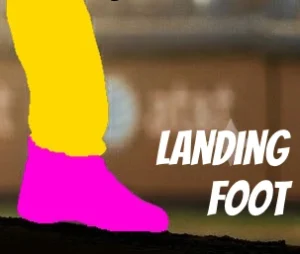
The landing foot has a lot more to do with a successful knuckleball than you might think. The way in which you land will determine your balance at release and the quality of your hip rotation so that you can pull the knuckleball through the slot effectively. If you land improperly, than you’ll open yourself up to pushing the ball which would lead to a sore arm or injury.
Landing Foot Mechanics
#1: Feel Difference Between Touch Down and Putting Weight Into Ground.
There are two different points in time that you need to become familiar with — when the foot touches the ground vs the moment you body weight presses into the ground. Knowing the difference and FEELING the difference between these two moments in time will set you up for success with your knuckleball mechanics.
#2: Land on Flat Foot.
This one adjustment will almost always visibly reduce the spin of your knuckleball immediately. And that’s because, for a brief moment, you are perfectly balanced like you’re on a surfboard or skateboard. You have ultimate control over your body, but, more importantly, it’s easier to keep your shoulders level and stay balanced at release which is critical for the knuckleball.
#3: Land Foot at 23 Degrees Closed.
Now, this is some high-level stuff that I’m going to share with you through Timmy. The knee joint is a simple hinge joint and we need to block the front leg effectively for extension. So, if you land your toes straight on to the target, then you open that hinge joint to drift the landing leg forward. It’s better to land slightly closed with the toes to more easily prevent this energy leak.
#4: Land Online Or Slightly Closed.
You need to land your foot online to the target or up to six inches closed. This sets your shoulders inline with the target so that all your hip rotation can be captured into the ball effectively. If you land too closed, then you’ll be forced to throw across your body which will move your fingertips out from behind the ball. If you land open, then all your energy is going to the glove side so you’re left flipping a grenade to the plate which opens you up for injury.
#5: Land From Above.
High-level pitchers rotate their hips so well using their drive leg and glutes that they land their front foot from above. This one is difficult to cue up in your head and it’s nearly useless to try to do this with your front foot, but it’s a good indicator that your back leg mechanics are working well. If you land from above, then you’re clearing your hips which will allow you to pull the ball through into release properly.